Wednesday, May 4, 2011

Year 10 Thursday 5/5: Mapping

Using the Synoptic Maps and the Sydney weather report below answer the following questions: (more questions under the synoptic charts). Copy the images from this page and put them in your blog.

  1. What is it about the pressure system stalled over Australia that relates to the weather over the next 4 days?
    There is a high pressure which will mean warm sunny weather over the next four days with minimal cloud cover. 
  2. What is the air pressure in each of the next 4 days for each of the capital cities? How does this correspond with the predicted weather for these cities?
Thursday
Brisbane - 1017 hpa
Sydney -  1022 hpa 
Melbourne - 1026 hpa
Canberra - 1024 hpa
Hobart - 1023 hpa
Darwin - 1012 hpa
Perth - 1012 hpa
Adelaide - 1025 hpa
Friday 

Brisbane - 1015 hpa
Sydney -  1012 hpa
Melbourne - 1024 hpa
Canberra - 1020 hpa
Hobart - 1020 hpa
Darwin - 1012 hpa
Perth - 1020 hpa
Adelaide - 1024 hpa
Saturday 

Brisbane - 1017 hpa
Sydney -  1013 hpa
Melbourne - 1018 hpa
Canberra - 1020 hpa
Hobart - 1016 hpa
Darwin - 1012 hpa
Perth - 1020 hpa
Adelaide - 1020 hpa
Sunday 

Brisbane - 1016 hpa
Sydney -  1018 hpa
Melbourne - 1024 hpa
Canberra - 1020 hpa
Hobart - 1024 hpa
Darwin - 1012 hpa
Perth - 1016 hpa
Adelaide - 1024 hpa

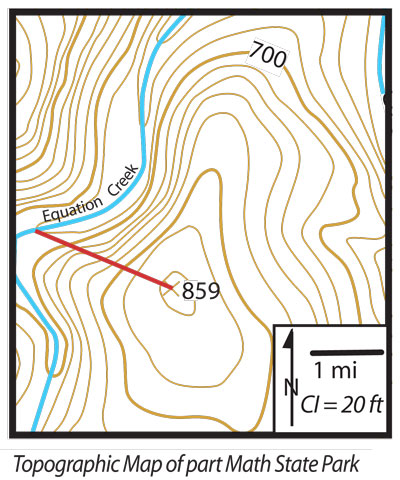
What is the contour interval (sometimes abbreviated CI)? Convert to metric. 
20 feet (6m)
What is the scale of the map? Convert it into the metric system.
1cm = 1 mile or 1cm = 1.6 km
What is the gradient of the line? Calculate in metric system.
859-680 = 121 (36m)
2cm line = 2 miles (3218m)
gradient = 3218/36
= 89

Monday, May 2, 2011

Year 10 Thursday 27/4 - Part 2, New York City in 5 images

New York is the most populous city in the United States and the center of the New York metropolitan area, which is one of the most populous metropolitan areas in the world. New York City exerts a significant impact upon global commerce, finance, media, culture, art, fashion, research, technology, education, and entertainment. As the home of the United Nations Headquarters, it is also an important center for international affairs. The city is often referred to as New York City or the City of New York, to distinguish it from the state of New York, which is apart from.
The Statue of Liberty is a colossal neoclassical sculpture on Liberty Island in New York Harbor, designed by Frédéric Bartholdi and dedicated on October 28, 1886. The statue of Liberty is well known around the world and is one of the most iconic landmarks in New York.

Times Square is a major commercial intersection in the borough of Manhattan in New York City, at the junction of Broadway and Seventh Avenue and stretching from West 42nd to West 47th Streets. Times square represents the busy and bustling city that New York is, as well as all the culture and life that comes in and out of New York City.

The Brooklyn Bridge is one of the oldest suspension bridges in the United States. Completed in 1883, it connects the New York City boroughs of Manhattan and Brooklyn by spanning the East River. With a main span of 1,595.5 feet (486.3 m), it was the longest suspension bridge in the world from its opening until 1903, and the first steel-wire suspension bridge. bridges are the easiest way to link New York City and having a massive bridge like Brooklyn Bridge is necessary for the city to work without too many delays.


Central Park is a public park in the center of Manhattan in New York City, United States. The park initially opened in 1857, on 843 acres (3.41 km2) of city-owned land. This park is the center piece of New York City, hence its name, no other city in the world has anything like this or at least of its size. It allows the busy office workers to take a break every now and then and still enjoy nature as well as providing a tourist attraction.

The taxicabs of New York City, with their distinctive yellow paint, are a widely recognized icon of the city. Taxicabs are operated by private companies and licensed by the New York City Taxi and Limousine Commission. The yellow taxicabs are the most common form of transport in New York City, but walking is always faster!

Wednesday, April 27, 2011

Year 10 Thursday 27/4 - Venice a City in Five Images

-          1. Venice is a combination of many separated strips of land and islands.
-          2. The bricks which hold the water back eventually erode and have to be restored
-          3. High chance of flooding from higher than normal tide.
-          4. 438 bridges
-          5. Sewage drains into the canals
-         6.  Building techniques – Building on water

Wednesday, March 23, 2011

Assessment Prep: Urban Sprawl

1. Identify specific examples of Urban Sprawl and Consolidation in Sydney and describe how these are examples of urban sprawl (include photos). (1 of each - consolidation and sprawl)


Ku-ring-gai


In Ku-ring-gai Barry O'Farrel is planning to bring in 10,000 more living spaces in the form of high rises by 2031. The development of high rises while still relatively close to the city makes this an example of urban consolidation. 


Stop_at_6000
This is a campaign poster of "not so high in Ku-ring-gai" where they want Barry O'Farrel to stop at 6,000 new living spaces instead of the full 10,000.  

This will be bad for the area as it will cost a lot of money as well as bringing in a much higher population density. It will also cut into the resources available to the area.

Green Square:


Year 10: Urban Sprawl or Consolidation: Jordan Springs

1. Is this an example of urban consolidation or urban sprawl? Why?
Jordan Springs is an example of urban sprawl because the definition of urban sprawl is: "a characteristic of Australian cities where population growth has caused expansion outwards in size with the creation of new low-density suburbs" which is what Jordan Springs is compared to urban consolidation which is: "the redevelopment of parts of a city to achieve a higher population density, characterised by high-rise apartment complexes and villa developments" which is not what Jordan Springs is.


2. Do you think that this development is positive or negative for the surrounding community? For Sydney? For Australia?

I think it is positive as it provides more room for people to live and keeps people from overcrowding other areas. It is also nature friendly which is good for the environment. As well as being nature friendly it also has good road designs and public transport access to be pedestrian friendly and promote exercise. It is not beneficial to Sydney because it forces Sydney to give some of its recourses as well as it could draw people away from Sydney to go live there.

Wednesday, March 9, 2011

Year 10 Thur 10/3: Urban Planning and Development

1. A characteristic of Australian cities where population growth has caused expansion outwards in size with the creation of new low-density suburbs.

2.  The redevelopment of parts of a city to achieve a higher population density, characterised by high-rise apartment complexes and villa developments

3. An urbanised country is when a high amount of the population live in urban centres. While the definition of an urban centre varies from country to country, it is generally agreed that they have the following features:
4.
1 Sydney, NSW population: 3 502 000, land area (square kilometres): 1 687, Population density per square kilometre, 2 076
2 Melbourne, VIC population: 3 162 000, land area (square kilometres): 2 080, Population density per square kilometre: 1 520
3 Brisbane, QLD population: 1 508 000, land area (square kilometres): 1 603, Population density per square kilometre: 941

5. The appealing characteristics of living on the coast have influenced the location of Australia's capital cities. All but one are located on the coast where most people prefer to live.

6.
• a high population density
• a high proportion of the population working in
manufacturing and/or professional or service-related
industries
• they are centres of business, trade, tourism,
entertainment and finance.

7. Australian cities have a very high population density compared to most other cities in the world as almost all of the population live in cities and not many live in the country towns and central Australia.

8.  One of the changing aspects of Australian cities is the movement towards higher population densities within the city. In a process known as urban consolidation, land within the existing city’s boundary is developed with high-rise apartment complexes, townhouses and villa developments. The advantage of this style of development is that the infrastructure like public transport, electricity and water supplies are already built for the developments—it means they are used more intensively. All Australian cities face the need to control urban sprawl and so are moving in the direction of urban consolidation.

9.  Urban planners have had to be innovative in their design of apartments and new estates to manage the impacts of population growth in cities. 

10. a. Melbourne
b. The amount of people per square kilometer
c. Sydney, Melbourne, Adelaide, Wollongong, Perth, Gold Coast, Newcastle, Canberra, Brisbane, Gosford
d. 8/10

11. The residents will have complaints about the buildings blocking their view, their sunlight as well as lots of noise and inconvenient travel routes. The structures will make the community become densly populated therefore having longer lines at shops etc.

12. In houses you can have your own garden and private pool/spa as well as easy access in and out of your house. But apartments are usually seen as safer because they have better security systems to stop people entering the building.

Monday, March 7, 2011

Year 10: Urban Renew and Decay


Define the following terms and include an example of each and explain how your example relates the word:

1. Aesthetics - The looks and features of a particular object.

These buildings have been designed in an Aesthetically pleasing way to give the city character and beauty.

2. Safety - Any defensive location or structure in a city, eg a seawall, a castle, city built on a hill to protect from floods

This seawall is protecting the city from very strong storm waves. These waves are potentially devastating.

3.  Slums - a run-down area of a city characterized by substandard housing and squalor and lacking in tenure security.

This Aftrican slum shows very poor housing conditions, no paved streets and no room for the environment to develop.

4. Decay - Decay is the way a specific building or city lasts over time. Whether the building is still standing or whether it still looks appealing etc.
This building has weathered and been vandalised and therefore has decayed.

5. Reconstruction and Renewal - Urban renewal is a program of land redevelopment in areas of moderate to high density urban land use.


File:Melbourne docklands urban renewal.jpg


Melbourne Docklands urban renewal project, a transformation of a large disused docks into a new residential and commercial precinct for 25,000 people

6. Transport - Transportation planning is a field involved with the evaluation, assessment, design and siting of transportation facilities (generally streets, highways, footpaths, bike lanes and public transport lines).


This map of San Fransisco's road plan in 1948 shows that the city was designed with ease of transportation in mind.

7. Suburbanization - a term used to describe the growth of areas on the fringes of major cities

File:Suburbia by David Shankbone.jpg

This aerial shot shows a town which has become extremely crowded with little regard for the environment and is an example of suburbanization.

8. Environmental Factors -  the process of facilitating decision making to carry out development with due consideration given to the natural environmental, social, political, economic and governance factors and provides a holistic frame work to achieve sustainable outcomes.

This image shows a  city which has been designed around the environment as you will notice plenty of trees and vegetation as well as plants growing on top of the buildings.

9. Light and Sound - The 'pollution' of light and sound throughout a city or urban area. This can also be the lack of light e.g. a building blocks out the sun making a part of the city in shade for 90% of the day.


This picture shows the light that a city emits when the sky should be pitch black and the stars showing. Instead the sky is an eerie orange colour which is unappealing to most people.